Puyan Guo and Yu Xu
Nanjing Kerun Industrial Media Co., Ltd., Nanjing, Jiangsu 211100, China
Abstract: Surface appearance after heat treatment is an important quality criterion for bearing components. A uniform, bright finish can eliminate additional operations such as shot blasting and reduce production costs. Oil-soluble degradation products that accumulate during prolonged use of quenching oil can impair component appearance and cannot be removed by conventional centrifugal filtration. This study presents an online purification process combining polar adsorption with centrifugal filtration. KR-CW carbon removal agent acts as a polar adsorbent, promoting the aggregation of soluble degradation products into larger species that can be removed by an automatic scraper centrifugal filter. In a field trial, the oil brightness rating improved from Grade 5 to Grade 2, the oxidation-related FTIR absorption band near 1705 cm⁻¹ decreased in intensity, and bearing surfaces changed from dull and stained to a uniform silver-gray metallic finish. The process operated without furnace shutdown. These results indicate potential benefits in extending oil service life and reducing component rework.
Keywords: quenching oil purification; carbon removal filtration; bearing surface appearance; centrifugal filtration; online purification
1 Introduction
As quality requirements in metal heat treatment become more demanding, treated components must meet both mechanical property requirements and surface appearance criteria. GB/T 34891-2017, Rolling Bearings—High-Carbon Chromium Bearing Steel Parts—Specifications for Heat Treatment [1], requires quenched and tempered bearing components to be free from impact damage, rust, mottling and adhering contamination, with a uniform overall color, whether silver-gray, blue or black. Manufacturers often add shot blasting, bluing or blackening to achieve a consistent appearance, increasing production costs. Achieving the required finish directly during heat treatment is therefore an important practical objective.
Previous work has addressed equipment, furnace atmosphere and contamination before heat treatment to mitigate defects such as black spots, darkened or peeling surfaces, and localized or general blue discoloration. Comparatively little attention has been given to appearance defects associated with quenching oil and their remediation. Once the oil is identified as the cause, a complete bath replacement is a common response [2], with associated purchasing, waste treatment and environmental burdens.
The effect of quenching oil on surface appearance extends beyond its cooling characteristics. Contamination and changes in other physicochemical properties can produce black spots, streaks or general darkening. During service, the oil accumulates foreign matter and inorganic salts. Thermal exposure and the catalytic effect of ferrous components promote oil degradation, generating soluble oxidation products and sludge. During quenching, these materials may adhere to or form baked-on deposits on component surfaces, impairing the final appearance.
Centrifugal filtration is widely used for quenching oil purification because of its relatively low cost, efficiency and ease of operation [3]. Its separation mechanism, however, is effective mainly for insoluble contaminants such as carbonaceous particles, inorganic salts and sludge. It does not remove the oil-soluble oxidation products formed during degradation, which are among the causes of deteriorating surface appearance. Conventional centrifugal filtration alone may therefore provide only limited improvement.
This study evaluates a production-scale purification process combining polar adsorption with centrifugal filtration, referred to here as carbon removal filtration. KR-CW adsorbs soluble degradation products and promotes the formation of larger aggregates, which are subsequently removed by a high-speed automatic scraper centrifugal filter. The objective is to address the oil-soluble contaminants that conventional filtration cannot remove and provide a practical reference for online maintenance of similar heat treatment systems.
2 Materials and Methods
2.1 Materials and Equipment
The purification procedure was developed with reference to the relevant sections of the Heat Treatment Handbook [4]. The following materials and equipment were used:
1. Quenching oil: an isothermal quenching oil in service for more than 12 months in a mesh-belt furnace at a bearing manufacturer.
2. KR-CW carbon removal agent: supplied by Nanjing Kerun Industrial Media Co., Ltd.
3. Filtration equipment: an automatic scraper centrifugal filter supplied by Nanjing Kerun Industrial Media Co., Ltd.
4. Quenching equipment: a continuous mesh-belt quenching furnace.
2.2 Purification Procedure
The process comprised the following steps:
1. Position the filter suction line in the lower region of the oil bath at the furnace discharge end, approximately one-third of the bath depth above the bottom. Position the return line at the lift-out belt end, approximately one-third of the bath depth below the oil surface.
2. Add KR-CW at several locations around the bath in small, repeated increments, to a total dosage of 0.5–1% of the oil bath volume. Operate the agitation system and maintain the oil at 100 °C to ensure thorough mixing.
3. After approximately 2 h of circulation and agitation at temperature, start the automatic scraper centrifugal filter. The filter separates the aggregates formed through adsorption, together with solid contaminants, and automatically discharges the collected material.
4. Continue centrifugal filtration for 3 days, adding the remaining KR-CW in increments and repeating the filtration operation until the full planned dosage has been introduced.
The entire purification process was carried out online, without shutting down the furnace or interrupting normal production.
2.3 Test Methods
Oil samples taken before and after treatment were evaluated using the following methods:
Physicochemical properties: water content was measured in accordance with GB/T 260; kinematic viscosity at 40 °C in accordance with GB/T 265; and solid contaminant content using Method A of GB/T 8926.
Cooling characteristics: characteristic temperature and maximum cooling rate were measured using a cooling-curve analyzer in accordance with GB/T 30823, Nickel-Alloy Probe Test Method for Determining the Cooling Characteristics of Industrial Quenching Oils. Temperature–time and cooling-rate–time curves were recorded during cooling from 850 °C through the specified temperature range.
Brightness rating: the oil was evaluated in accordance with SH/T 0564, Test Method for Brightness of Heat Treatment Oils. Standard specimens quenched in the test oil were compared with reference specimens, with Grade 1 representing the best appearance and Grade 5 the poorest.
Fourier-transform infrared spectroscopy: FTIR spectra were collected before and after treatment to assess changes in the oxidation-related absorption band near 1705 cm⁻¹ [5].
3 Results and Discussion
3.1 Changes in Physicochemical Properties
Table 1 compares the properties of the mesh-belt furnace quenching oil before and after KR-CW treatment and filtration at the bearing manufacturer.
Table 1 Physicochemical properties of quenching oil before and after carbon removal filtration
| Parameter | Before treatment | After treatment | Fresh oil |
| Water content / % | 0.03 | 0.01 | 0.01 |
| Kinematic viscosity at 40 °C / mm²/s | 112.7 | 105.8 | 100.3 |
| Solid contaminants / % | 0.30 | 0.08 | 0 |
Kinematic viscosity decreased from 112.7 to 105.8 mm²/s after treatment, consistent with the removal of viscous degradation products and a partial return toward the fresh-oil value. Solid contaminant content decreased from 0.30% to 0.08%, demonstrating effective removal of insoluble material.
3.2 Cooling Characteristics
Figure 1 compares the cooling curves before and after treatment. The corresponding parameters are given in Table 2.
Table 2 Cooling characteristics before and after carbon removal filtration
| Parameter | Before treatment | After treatment |
| Characteristic temperature / °C | 655 | 651 |
| Maximum cooling rate / °C/s | 76.9 | 76.1 |
The overall cooling-curve profiles were similar before and after treatment. Characteristic temperature changed from 655 to 651 °C, and maximum cooling rate from 76.9 to 76.1 °C/s. The study reports that both differences were within experimental error. Under the conditions evaluated, the treatment therefore did not materially alter the cooling characteristics of the oil.
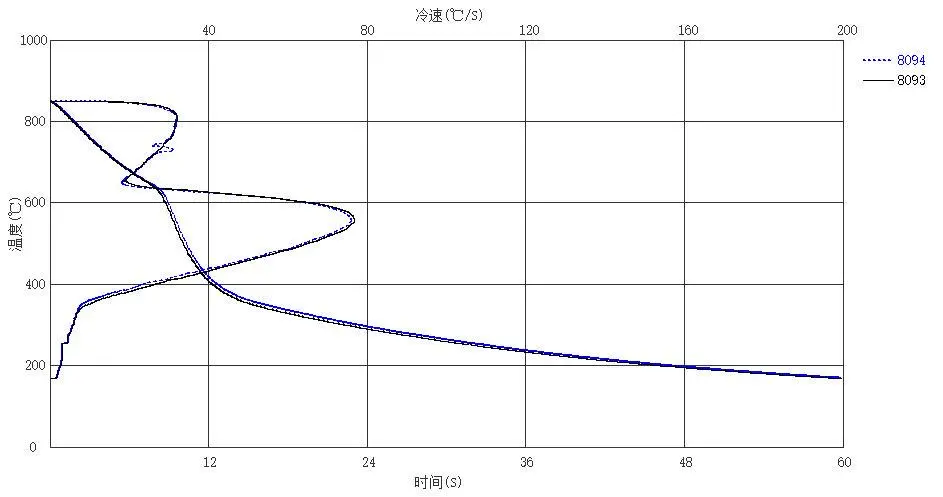
Figure 1 Quenching oil cooling curves before and after KR-CW treatment
3.3 FTIR Analysis
Figure 2 compares selected regions of the FTIR spectra before and after carbon removal filtration.
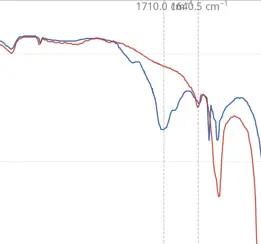
Figure 2 Selected FTIR spectral region before and after KR-CW treatment
The oxidation-related absorption band near 1705 cm⁻¹ decreased markedly after treatment. This band is associated with carbonyl (C=O) stretching vibrations and is an indicator of oxidative degradation in quenching oil. The reduction in intensity is consistent with the removal of soluble oxidation products by the KR-CW treatment.
3.4 Improvement in Component Appearance
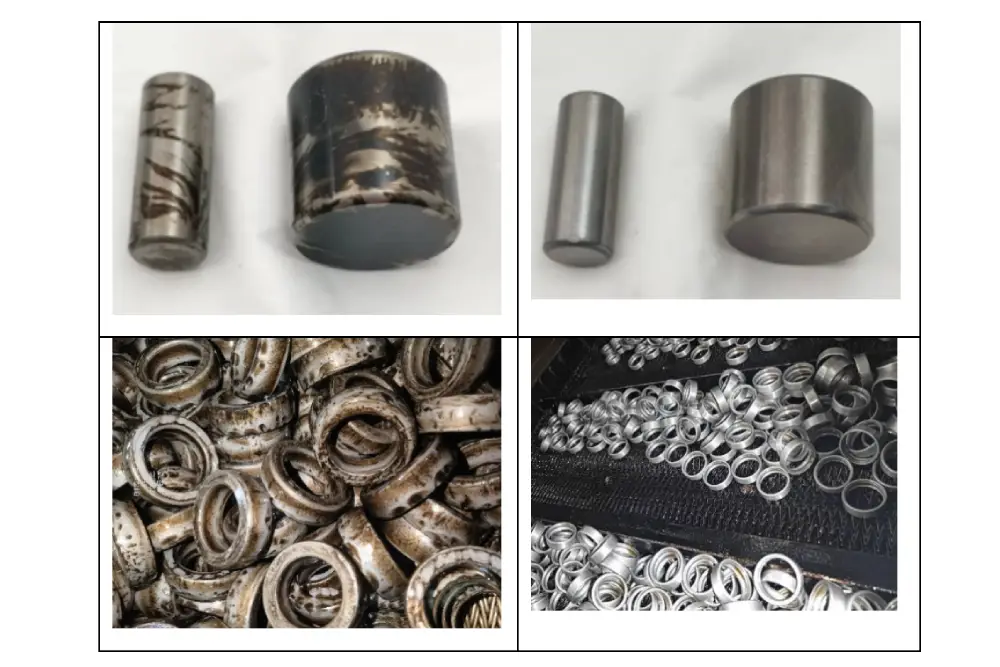
Figure 3 compares component appearance and the brightness test results before and after treatment.
Figure 3 Component appearance before and after KR-CW treatment
(a) Before treatment: brightness Grade 5. (b) After treatment: brightness Grade 2.
Before treatment (Figure 3a), the quenched surfaces showed pronounced brown oil stains and adhering contamination, with an overall dull appearance and a brightness rating of Grade 5. After treatment (Figure 3b), the surfaces displayed a uniform silver-gray metallic finish, with substantially less staining and contamination. The brightness rating improved to Grade 2.
Two complementary mechanisms can account for this improvement. Centrifugal filtration removes insoluble contaminants, including carbonaceous particles, sludge and inorganic salts, reducing particulate deposition on the component surface. Polar adsorption by KR-CW promotes the aggregation and subsequent centrifugal removal of soluble oxidation products. During the high-temperature stage of quenching, these products can separate from the oil and form adhering or baked-on deposits that contribute to mottling and dullness. Removing both contaminant fractions improves surface appearance.
4 Economic Benefits
Table 3 Operational and economic benefits of carbon removal filtration
| Benefit | Conventional practice | Carbon removal filtration |
| Longer oil service life | Complete bath replacement after degradation incurs costs for fresh oil, waste-oil treatment, shutdown and tank cleaning. | Removal of soluble degradation products can extend useful oil life and reduce oil purchasing and disposal requirements. |
| Less component rework | Appearance defects require shot blasting, bluing or blackening, increasing processing costs and potentially affecting dimensional accuracy. | Improved as-quenched appearance can eliminate some post-treatment operations and reduce rework. |
| Less manual work | Conventional mobile centrifugal filtration requires periodic shutdown, vessel opening, sludge removal and restart, with substantial inspection and cleaning work. | Automatic filtration and sludge scraping reduce manual inspection and cleaning requirements. |
| Maintained production | Oil replacement and tank cleaning require furnace shutdown and disrupt the production cycle. | Online purification proceeds without furnace shutdown or interruption of normal production. |
The comparison in Table 3 identifies four potential benefits relative to full-bath oil replacement and conventional filtration. First, removal of soluble degradation products can extend useful oil life and reduce fresh-oil purchasing and waste-oil treatment requirements. Second, improved as-quenched appearance can reduce rework and, for suitable products, eliminate operations such as shot blasting or bluing, while avoiding their possible effects on dimensional accuracy. Third, automatic filtration and sludge scraping reduce manual inspection and cleaning. Fourth, online purification maintains production without a furnace shutdown. Together, these operational benefits support the economic rationale for the process.
5 Conclusions
1. The combined polar adsorption and centrifugal filtration process uses KR-CW to promote the aggregation of oil-soluble degradation products into larger species that can be centrifugally separated. An automatic scraper centrifugal filter enables online removal, addressing a limitation of conventional filtration.
2. In the field trial, the brightness rating improved from Grade 5 to Grade 2, and bearing surfaces changed from dull and mottled to a uniform silver-gray metallic finish. The reduced FTIR absorption near 1705 cm⁻¹ was consistent with removal of soluble oxidation products. Cooling characteristics remained substantially unchanged under the test conditions.
3. The process operates online without furnace shutdown and offers potential savings through longer oil life, fewer post-treatment operations and reduced manual cleaning. It provides a practical reference for quenching oil maintenance and surface appearance control on similar heat treatment lines.
References
[1] National Technical Committee on Rolling Bearings of the Standardization Administration of China. Rolling Bearings—High-Carbon Chromium Bearing Steel Parts—Specifications for Heat Treatment. GB/T 34891-2017. Beijing: Standards Press of China, 2017. [In Chinese.]
[2] Zhao Xiaoliang. Surface appearance quality of components heat treated in mesh-belt furnaces. Heat Treatment of Metals, 2018, 43(10): 215–219. [In Chinese.]
[3] Shen Genlin, He Chongjun. Application of a centrifugal oil purifier to quenching oil purification in controlled-atmosphere heat treatment. Heat Treatment Technology and Equipment, 2025, 46(6): 93–96. [In Chinese.]
[4] Heat Treatment Branch of the Chinese Mechanical Engineering Society. Heat Treatment Handbook, Volume 1: Fundamentals of Heat Treatment Processes. 4th ed. Beijing: China Machine Press, 2008. [In Chinese.]
[5] Chen Chunhuai, Chen Shifeng. Application of FTIR in quenching oil analysis. Heat Treatment, 2014, 29(5): 70–72. [In Chinese.]