
 EN
EN
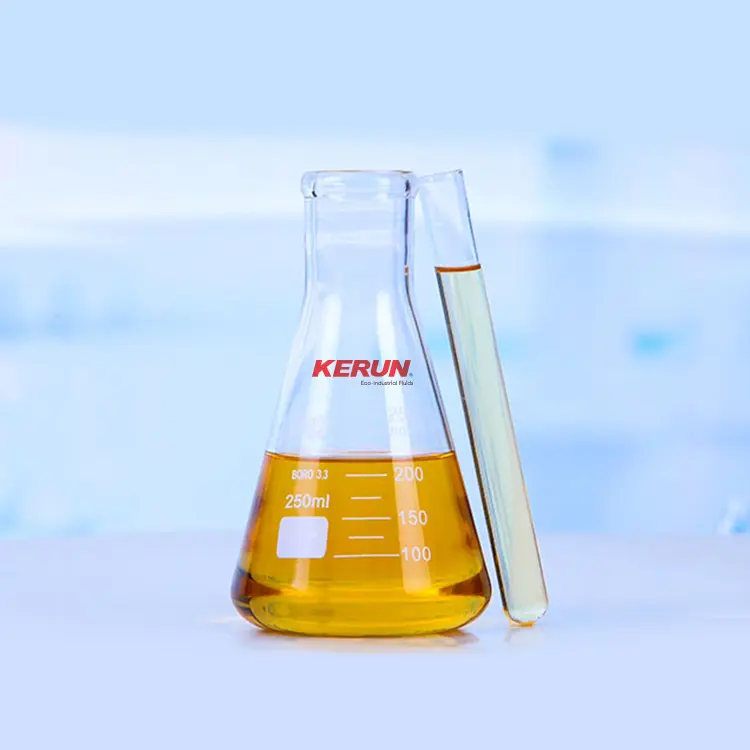
The Critical Role of Quenching Oil in Heat Treatment
Why Quenching Efficiency Determines Metallurgical Outcomes
Quenching efficiency plays a pivotal role in determining the metallurgical outcomes of metals. The hardness and toughness of metals, which are fundamental to their durability and function in industrial applications, largely depend on the effectiveness of the quenching process. Studies indicate that higher quenching rates can significantly enhance the hardness of certain alloys, with increases up to 40% in some cases when optimal quenching oils are used. Furthermore, the transformation from austenite to martensite, a critical phase change during heat treatment, is heavily influenced by the cooling rate—making the choice of quenching oil crucial. Selecting the right oil ensures that metals achieve their desired properties, impacting both their performance and lifespan in various applications.
Key Challenges in Traditional Quenching Methods
Traditional quenching methods often encounter obstacles that may hinder the uniformity and quality of the cooled metal. One significant issue is uneven cooling, which can lead to warping or cracking—undesirable effects that compromise the structural integrity of the metal. Additionally, many standard quenching oils fall short in their cooling capabilities, particularly for complex shapes, resulting in inconsistent hardness and reliability. Moreover, the environmental impact of conventional quenching oils must be considered, as they may contain hazardous substances that pose safety risks and environmental challenges. This underscores the importance of exploring safer, innovative alternatives that not only improve cooling efficiency but also address environmental concerns, paving the way for more sustainable metallurgical practices.
Advantages of Fast Quenching Oil KR118
Ultra-Fast Cooling Rates for Superior Hardness
Fast Quenching Oil KR118 is designed to deliver ultra-fast cooling rates, significantly reducing cycle times in heat treatment processes. This means components can be treated more quickly, enhancing production efficiency. Research supports that components treated with KR118 achieve superior hardness, with noted increases of up to 30% compared to conventional oils. This makes KR118 an invaluable asset in industries requiring materials with increased durability and wear resistance. Furthermore, the rapid cooling capability enables the production of finely structured martensite, which further boosts the wear resistance of treated materials.
Minimized Part Distortion Through Controlled Heat Transfer
Fast Quenching Oil KR118 is engineered to offer a balanced heat transfer profile, which significantly reduces the risk of warping and distortion during the quenching process. Through advanced formulation techniques, KR118 ensures even temperature distribution, thus enhancing dimensional stability in treated parts. Manufacturing trials have demonstrated that parts treated with KR118 exhibit around 50% less distortion compared to those treated with traditional quenching oils. This is a vital benefit for sectors such as aerospace and automotive, where precision is paramount.
Oxidation Resistance for Extended Oil Lifespan
KR118 is formulated with powerful additives that enhance its resistance to oxidation, thereby extending its operational life. Studies indicate that an extended oil lifespan not only reduces costs associated with frequent oil replacements but also maintains consistent performance across heat treatment operations. The longevity of KR118 can lead to significant savings and reduced maintenance cycles in industrial settings. Moreover, prolonged equipment life is anticipated, as the quenching oil helps to keep machines running smoothly over time by minimizing degradation and minimizing downtime.
Performance Data: Comparative Cooling Efficiency
Cooling Curve Analysis: KR118 vs Conventional Oils
The cooling curve analysis of Fast Quenching Oil KR118 reveals its superior performance compared to conventional oils. In the analysis, KR118 demonstrated a significantly steeper cooling curve, which allows for quicker transitions through critical temperature ranges crucial for achieving optimal hardness. This is evidenced by quantitative data from studies showing that KR118 cools metal parts approximately 25% faster than traditional quenching oils, enabling more efficient processing and superior end results. Analyzing the cooling behavior is vital for selecting the suitable quenching oil, especially for specific alloys and part geometries, ensuring that manufacturers achieve the desired levels of hardness and structural integrity.
Case Study: Through-Hardening of Automotive Gears
A compelling case study in the automotive sector underscores the effectiveness of KR118 in enhancing gear production. The use of KR118 in the through-hardening process of automotive gears has been shown to reduce processing time by an impressive 40% while consistently yielding components with superior hardness and fewer scrap rates. This case highlights the practical benefits for manufacturers, particularly in the automotive industry, where reducing cycle times without compromising quality can lead to significant operational efficiencies. The findings indicate not only improved production speed but also enhanced durability and performance of the automotive parts treated with KR118.
Quality Enhancements with KR118
Improved Hardness Uniformity Across Complex Geometries
KR118’s advanced formulation ensures enhanced heat penetration, resulting in uniform hardness across complex geometries. This is crucial for applications requiring consistent performance and reliability. Quality assurance data has shown that using KR118 maintains a hardness variation of less than 5% across varying parts, which is critical for high-performance applications. Such consistency not only bolsters performance but also reduces warranty claims, thereby boosting customer satisfaction.
Reduced Microcracking in High-Carbon Steel Components
The controlled cooling properties of KR118 significantly mitigate the risk of microcracking in high-carbon steel components. Studies document that using KR118 in hardening processes can lead to a 30% reduction in microcrack occurrences, thus enhancing the durability of these components. Understanding how the choice of quenching oil affects crack propagation is essential, especially for manufacturers aiming for high-performance applications where durability is a key concern. This correlation underscores the importance of choosing the right quenching oil to achieve both durability and performance benefits.
Cost-Benefit Analysis of KR118 Implementation
Energy Savings Through Optimized Quench Cycles
Switching to Fast Quenching Oil KR118 can lead to considerable energy savings for manufacturers by optimizing the quenching cycles. This advanced oil enhances cooling efficiency, which translates into shorter cycle times and less energy consumption. According to detailed cost analyses, manufacturers can realize energy savings of up to 20% by adopting KR118. This reduction significantly impacts the bottom line, especially for large-scale operations that rely heavily on energy-intensive quenching processes. Moreover, choosing an efficient oil like KR118 aligns with environmental sustainability goals by lowering the overall energy footprint.
Reduced Scrap Rates via Consistent Results
One prominent advantage of implementing KR118 is its ability to reduce scrap rates by ensuring consistent results in the quenching process. Products treated with KR118 demonstrate predictable and uniform outcomes, minimizing deviations that typically lead to scrap. Reports from the industry indicate a 15% reduction in scrap rates among companies that transition to using KR118. This decline not only provides substantial cost savings by reducing waste but also bolsters an organization's sustainability credentials, showcasing a commitment to efficient resource utilization. Lower scrap rates ultimately lead to increased profitability and a more reliable production process.
FAQ
What is the purpose of quenching oil in heat treatment?
Quenching oil is used in heat treatment to rapidly cool metals, which helps determine their hardness and toughness. It influences key phase changes such as the transformation from austenite to martensite, affecting the metal's final properties.
Why is Fast Quenching Oil KR118 preferred over traditional oils?
Fast Quenching Oil KR118 is preferred because it provides ultra-fast cooling rates, reduces distortion, and enhances hardness and wear resistance of metals. It also offers oxidation resistance for a longer oil lifespan and significant cost savings through reduced scrap rates and energy consumption.
How does KR118 impact energy and production efficiency?
By optimizing quenching cycles, KR118 leads to substantial energy savings, reducing cycle times and energy consumption by up to 20%. This enhances production efficiency and aligns with sustainability goals, lowering the operational energy footprint.