
 EN
EN
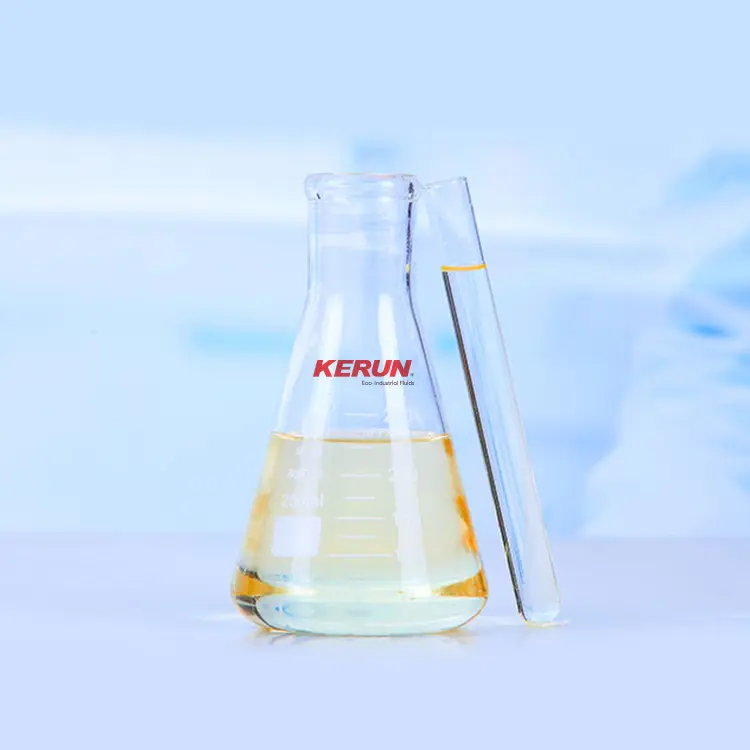
Introduction: Why Quality Matters in Fast Quenching Oil KR118
The Impact of Oil Quality on Metallurgical Outcomes
The quality of fast quenching oils is crucial for attaining desired metallurgical outcomes, such as hardness and tensile strength in metals. Quality oils, like KR118, ensure uniform cooling rates during the quenching process, which is essential for improving the mechanical properties of metals. Conversely, using poor-quality oils can result in inconsistent cooling, leading to defects such as warping, cracking, or reduced hardness in finished metals. These defects highlight the direct correlation between oil quality and metallurgical outcomes. Moreover, investing in high-quality fast quenching oil like KR118 can significantly reduce production costs attributed to defects and reprocessing, making it a sound investment for maintaining the quality and durability of metal products.
Risks of Poor-Quality Fast Quenching Oils
Poor-quality fast quenching oils can pose various risks, including increased oxidation rates and sludge production, which degrade quenching performance over time. Additionally, these substandard oils often have lower flash points, increasing the risk of fire or explosion during manufacturing processes, thus creating safety hazards. Evidence from metallurgical failure analyses indicates that the financial repercussions of such risks far outweigh any initial cost savings. This underscores the necessity of opting for high-quality oils to avoid safety hazards and ensure efficient production processes. High-quality oils are superior in maintaining performance and ensuring safety, reinforcing the importance of prioritizing oil quality over perceived short-term savings.
Key Evaluation Criteria for Fast Quenching Oil KR118
Cooling Speed and Heat Transfer Efficiency
The effectiveness of Fast Quenching Oil KR118 begins with its capacity for optimized cooling speeds, ensuring rapid heat transfer from the metal surface. This is a crucial factor in metallurgical applications, as it determines the cooling trajectory and directly affects the final mechanical properties of metal parts. To evaluate its efficiency, two critical parameters are considered: thermal conductivity and specific heat capacity. KR118 excels in these areas, ensuring that metals don't overheat during processing and that critical phase transformations occur properly. Lab tests indicate that KR118 outperforms traditional oils in cooling rates, allowing for greater control and precision in the quenching process.
Thermal Stability Under High-Temperature Conditions
Thermal stability is another vital parameter for assessing Fast Quenching Oil KR118, especially in high-temperature industrial settings. Maintaining performance integrity under extreme heat is essential to prevent oil degradation and ensure consistent metallurgical results. KR118 has been proven to surpass its competitors in thermal stability, maintaining its functional characteristics even after prolonged heat exposure. Experts recommend conducting cyclic thermal aging tests to empirically assess an oil’s thermal stability, and KR118 demonstrates robust performance retention, affirming its suitability for demanding industrial applications.
Oxidation Resistance and Longevity
The longevity and sustained effectiveness of fast quenching oils heavily depend on their oxidation resistance. For KR118, this is a core feature, as it significantly affects operational lifespan and associated costs. Formulated with advanced additives that inhibit oxidation, KR118 allows for extended oil-change intervals and reduces unplanned downtime. Long-term studies reveal that oils with high oxidation resistance, like KR118, endure more operational cycles without performance loss, offering undeniable value to manufacturers. By minimizing the frequency and cost of oil changes, KR118 enhances productivity and contributes to more economical manufacturing processes.
Physical Property Testing: Viscosity and Flash Point
Viscosity’s Role in Heat Transfer Dynamics
Viscosity is a pivotal factor influencing the heat transfer dynamics of fast quenching oils, like the Fast Quenching Oil KR118. In essence, viscosity reflects a fluid's resistance to flow, and thus, a lower viscosity can enhance the heat transfer capability. This is essential for effective rapid cooling in metallurgy, where heat dissipation is crucial for ideal material properties. Ensuring the viscosity is aligned with standard benchmarks is important to maintain optimal performance, especially under varying operational conditions. For instance, studies highlight that oils possessing an appropriate viscosity profile significantly improve quenching efficacy, translating to better mechanical attributes in metals.
Flash Point Testing for Safety and Performance
Flash point testing constitutes a critical safety evaluation for fast quenching oils, ensuring they possess a high enough flash point corresponding to a reduced flammability risk. This safety measure is paramount in handling and storing flammable substances within industrial settings. Adhering to regulatory standards, which dictate specific flash point requirements, minimizes potential hazards, fostering safer manufacturing environments. Through comparative flash point analyses, distinct performance characteristics between different oils can be determined, enabling more informed purchasing decisions. This allows users to select oils that not only meet safety benchmarks but also align with specific operational demands.
Contamination and Aging Resistance in Fast Quenching Oils
Detecting Water and Particulate Contamination
Detecting water and particulate contamination is crucial for maintaining the performance of fast quenching oils. Contaminants like water and particulates can severely impact the oil's effectiveness, so regular monitoring is essential. Techniques such as Karl Fischer titration are employed to measure water content accurately, with lower levels being preferable for maintaining optimal oil performance. By promptly identifying and addressing contamination, we can extend the oil's life and ensure that it continues to function at its best, thereby maintaining the quality of quenched metals.
Assessing Degradation via Acid Number and Sludge Formation
Assessing the degradation of fast quenching oils involves monitoring their acid number and identifying sludge formation. The acid number provides a measure of oil degradation, signaling when replacement or treatment may be necessary. The presence of sludge is an important indicator of oil breakdown; it disrupts heat transfer, potentially leading to operational challenges. Routine evaluation of both the acid number and sludge formation is recommended to ensure the oils maintain their performance and reliability, thus preventing costly downtime and equipment damage.
Best Practices for Maintenance and Filtration
Adopting best practices for the maintenance and filtration of fast quenching oils is vital for their longevity and performance. A rigorous maintenance schedule, involving regular checks and quality assessments, can significantly enhance oil life. Filtration systems also play a key role by removing particulate matter and water contaminants, thereby preserving the oil's properties over time. Industry standards advocate for a combination of preventive maintenance and real-time monitoring to achieve optimal results, ensuring that the oils continue to perform efficiently under varied operational conditions.
Lab vs. Real-World Testing Environments
Standardized Lab Tests (ASTM, ISO, and JIS)
Adhering to standardized tests such as ASTM, ISO, and JIS is essential for evaluating fast quenching oils in controlled environments. These standards create benchmarks for quality and performance, providing manufacturers with objective data to compare different products. By simulating various operational conditions, lab tests offer theoretical insights into how a quenching oil might perform. However, it's important to remember that these results often differ from real-world outcomes, emphasizing the need for further testing in practical settings. Consistency with these standards ensures reliability in performance expectations, but real-world validation remains crucial.
Monitoring Performance in Industrial Applications
Real-world performance monitoring is key for understanding how fast quenching oils behave in practical industrial settings. This approach lets us gather data that can pinpoint longevity, contamination rates, and operational efficiency that may not be evident in lab conditions. Continuous monitoring is particularly valuable because it identifies performance issues early, allowing for proactive intervention and maintaining optimal production quality. By analyzing data collected from actual usage scenarios, industries can adjust parameters for improved outcomes, something lab tests alone might not indicate.
FAQ Section
What are fast quenching oils?
Fast quenching oils are specialized oils used in the metallurgical process to rapidly cool metals, enhancing mechanical properties such as hardness and tensile strength.
Why is oil quality important in fast quenching processes?
Quality oil ensures uniform cooling rates, prevents defects like warping and cracking, and improves the overall durability and mechanical attributes of metals.
What risks do poor-quality quenching oils pose?
Poor-quality oils can increase oxidation rates and sludge production, lower flash points, and create safety hazards, resulting in costly reprocessing and manufacturing risks.
How does KR118 compare to traditional oils?
KR118 excels in cooling rates, thermal stability, and oxidation resistance, outperforming traditional oils in maintaining high-quality metallurgical results.