
 EN
EN
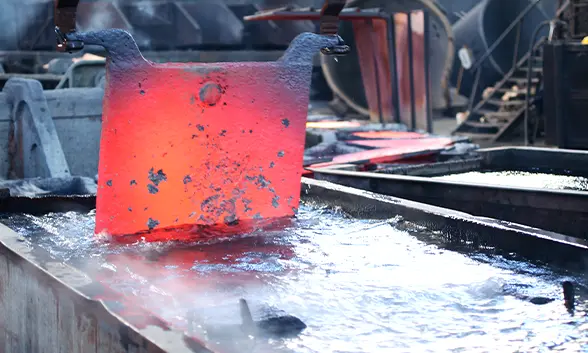
What is Fast Quenching Oil KR118?
Composition and Key Characteristics
Fast Quenching Oil KR118 is expertly formulated to meet the stringent demands of metalworking processes that involve rapid cooling. It is made from high-performance base oils blended with specialized additives, designed to enhance the quenching efficiency substantially. One of its key characteristics is the specific viscosity range that ensures optimal heat transfer, crucial for the development of solid microstructures during the quenching process. This characteristic allows for a distinctive balance between cooling speed and stability. Furthermore, KR118 offers excellent thermal stability, effectively preventing breakdown even under extreme temperatures often encountered in various metalworking applications such as annealing and tempering.
Industrial Applications of KR118
Fast Quenching Oil KR118 finds valuable applications across a wide range of industrial sectors including automotive and aerospace. Its primary benefit is in the enhancement of hardness and wear resistance of metal parts, which are frequently subjected to harsh operational conditions. In automotive industries, for example, KR118 is utilized for quenching steel components that demand high durability. The aerospace sector benefits similarly, where critical structural components require improved mechanical properties. Moreover, KR118 supports continuous production processes, contributing to increased productivity and reduced downtime, which is vital for high-demand industrial operations.
Key Properties of KR118 for Enhanced Product Quality
Controlled Cooling Rate and Thermal Stability
Fast Quenching Oil KR118 ensures a controlled cooling rate crucial for achieving desirable mechanical properties in quenched metals. This precision in cooling is vital to developing hardness and strength in metal components while minimizing the risk of distortion or cracking. KR118's exceptional thermal stability prevents premature breakdown, ensuring consistent performance throughout its lifecycle. By maintaining a controlled cooling rate, KR118 contributes significantly to the enhanced toughness and structural integrity of metal products, making it indispensable in industrial applications.
Superior Lubrication and Oxidation Resistance
KR118's formulation includes advanced additives that provide superior lubrication, effectively reducing friction during the quenching process. This not only leads to smoother operations but also enhances the overall efficiency of machinery, thereby reducing energy costs. Additionally, KR118's exceptional oxidation resistance plays a critical role in protecting components from deterioration over time, ensuring their longevity and maintaining structural integrity. This property is especially important in industrial settings where continuous production and machinery uptime are prioritized.
Minimized Sludge Formation
KR118 is expertly designed to minimize sludge formation, which is essential for maintaining clean systems during metal processing. By reducing sludge, KR118 extends the life of both the quenching oil and the equipment, thereby decreasing maintenance costs significantly. This capability is crucial for ensuring optimal cooling performance, which in turn supports consistent quality in finished products. Thus, the minimal sludge formation of KR118 not only enhances operational efficiency but also contributes to maintaining high standards in product quality.
The Science Behind Oil Quenching in Metalworking
Microstructure Transformation During Quenching
The quenching process is pivotal in causing microstructural transformations that directly enhance the hardness of metals. When using oil quenchants like KR118, the rapid cooling induces changes in the metal's microstructure, which contribute significantly to improved hardness. This transformation affects the distribution of phases within the steel, often leading to better strength and durability. Controlled quenching is vital in refining grain structures, a key aspect noted in various research studies. By achieving finer grains, the resulting metal exhibits enhanced mechanical properties, which are crucial for demanding industrial applications.
Role in Annealing and Tempering Processes
In the context of annealing and tempering, KR118 serves as a supplementary agent to stabilize the properties acquired during quenching. These processes are essential for relieving the stresses induced during the quenching phase, enabling the metal to achieve an optimal balance between hardness and ductility. The effective use of tempering with KR118 significantly contributes to the service life of crucial components, as it enhances their durability and resistance to wear. This balance is especially crucial for components that undergo extensive stress during their lifecycle, such as those in the automotive and aerospace industries.
Impact on Hardness vs. Ductility Balance
Finding the right balance between hardness and ductility is essential for the optimal performance of metal components, and oil quenchants like KR118 play an integral role in achieving this balance. Studies have shown that the quenching medium is pivotal in affecting the transformation process from austenite to martensite, which directly influences the metal's final properties. Understanding how this balance works is crucial in metalworking industries, where end-use demands vary widely. Achieving the right balance ensures the metal's reliability, performance, and adaptability to fluctuating industrial requirements.
Advantages of KR118 in Reducing Production Defects
Mitigating Distortion and Warping
KR118 oil plays a crucial role in reducing distortion and warping in metal parts during the cooling phase of heat treatment, a common challenge in metalworking. It provides a stable cooling rate, which effectively minimizes internal stresses that often lead to deformations. Empirical data supports that the use of KR118 significantly lowers rejection rates of defective parts, enhancing overall production efficiency. This characteristic of KR118 aligns with the need for precision in industrial applications where dimensional accuracy is paramount.
Preventing Cracking in High-Stress Components
One of the pivotal advantages of KR118 is its ability to prevent cracking in high-stress components that undergo rapid cooling. This property is especially paramount in structural and safety components where integrity is mandatory. Studies indicate that components treated with KR118 exhibit notably fewer instances of cracking compared to those treated with less effective quenching media. This underlines the importance of using high-quality quenching oils like KR118 to maintain the structural integrity essential in demanding industrial contexts.
Consistency in Batch Processing
Consistency in batch processing is another significant advantage offered by KR118. It ensures predictable results across multiple production runs, allowing manufacturers to fine-tune their processes and subsequently improve overall product quality. The stable performance of KR118 minimizes waste and rework, directly contributing to cost savings and operational efficiency. This reliability in achieving consistent outcomes makes KR118 an indispensable choice for industries focused on maintaining high standards of quality and reducing production inefficiencies.
KR118 vs. Alternative Quenching Media
Performance Comparison with Polymer Quenchants
In exploring quenching options, KR118 consistently outperforms polymer quenchants in crucial areas such as cooling rate and overall product quality. While polymer quenchants offer certain advantages, the capabilities of KR118 often result in superior hardness and improved surface finishes. This is particularly advantageous for industries requiring rigorous specifications and high-performance standards. Moreover, KR118's ability to function optimally across a broad range of temperatures adds to its appeal, making it a versatile choice for diverse metalworking applications.
Environmental and Safety Advantages Over Water Quenching
KR118 stands out as a safer and more environmentally conscious alternative to traditional water quenching. One of the key benefits is its minimized risk of hazardous splashing, which is a common safety concern with water quenching. Additionally, KR118 is formulated to reduce the release of volatile organic compounds (VOCs), thus aligning with rigorous environmental regulations and standards. This approach not only mitigates environmental impact but also reduces the likelihood of thermal shock, thereby enhancing safety for workers and preserving equipment integrity.
Cost-Efficiency in Long-Term Use
Choosing KR118 reflects a strategic investment, showcasing cost-efficiency through its long-lasting oil life and minimal maintenance demands. Despite a potentially higher upfront cost compared to cheaper alternatives, KR118 offers a lower total cost of ownership over time due to its superior performance. Users frequently report significant savings by reducing downtime and rework, ultimately leading to enhanced productivity. The feedback from these experiences underscores KR118's value in maintaining high operational uptime and quality assurance in production processes.
Optimizing Heat Treatment with KR118
Temperature and Immersion Best Practices
Effectively utilizing KR118 requires an understanding of optimal temperature ranges to achieve desired hardening effects. This precision ensures that the metal reaches the microstructural changes necessary for enhanced mechanical properties. Best practices also extend to immersion time, which is critical for ensuring complete coverage and consistent cooling rates across treated parts. By adhering to these techniques, we can enhance performance and boost quality assurance in manufacturing. Proper implementation results in more predictable and desirable outcomes, aligning with our industrial standards for quality and reliability.
Integration with Metalworking Fluids Systems
KR118 demonstrates excellent compatibility with existing metalworking fluids systems, contributing to higher process efficiency. This integration reduces potential disruptions and aids in maintaining the optimal conditions essential for uniform metallurgical characteristics. The harmonious chemical interactions between KR118 and other fluids allow for formulation fine-tuning specific to application needs. This adaptability ensures that KR118 complements existing industrial processes seamlessly, promoting effective operations that emphasize efficiency and effectiveness.
Maintenance Protocols for Extended Oil Lifecycle
Establishing robust maintenance protocols is crucial for maximizing KR118's operational lifespan and performance. Regular monitoring and filtration are vital practices to keep the quenching medium free from contaminants, ensuring consistent quality and efficiency. Documented best practices suggest that these protocols can significantly reduce oil replacement costs. This strategic approach to maintenance not only extends the life of KR118 but also supports sustainability goals by minimizing waste and optimizing resource use.