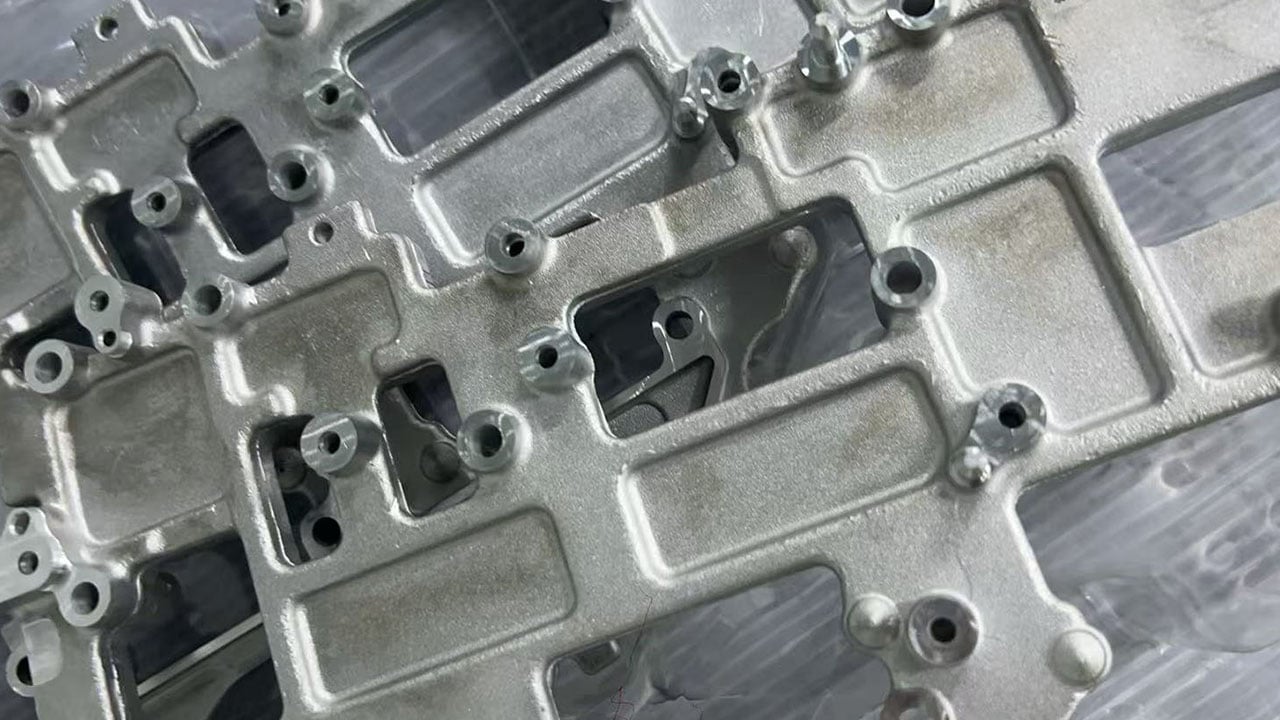
In machining, heat treatment, and component manufacturing processes, manufacturers often encounter similar challenges:
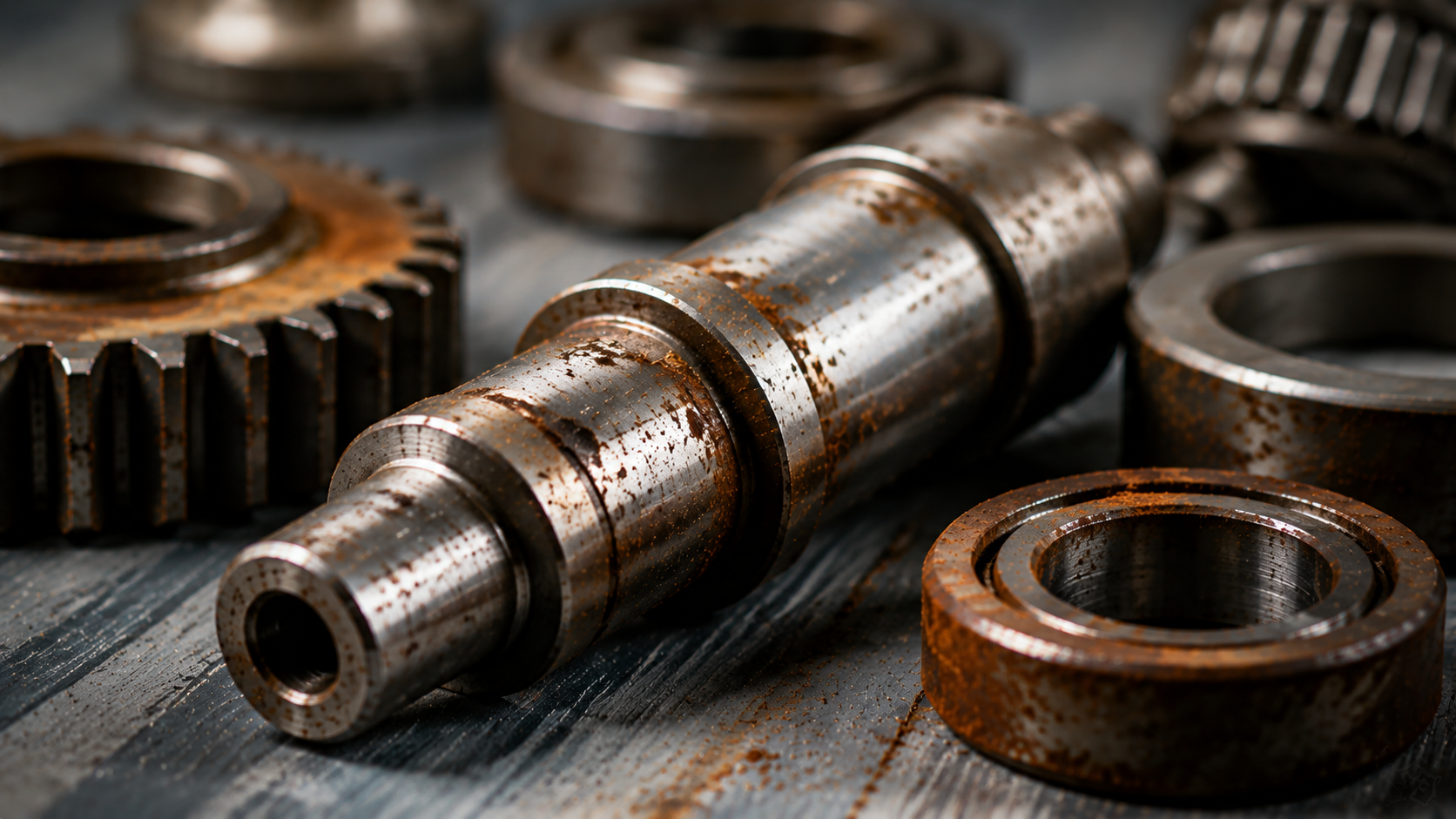
These issues may appear to be simple surface defects, but they can result in rework, scrap, and delivery risks.
Behind these problems lies a continuous interaction between metal and its surrounding environment — corrosion.
Understanding why corrosion occurs is the key to achieving more effective protection.
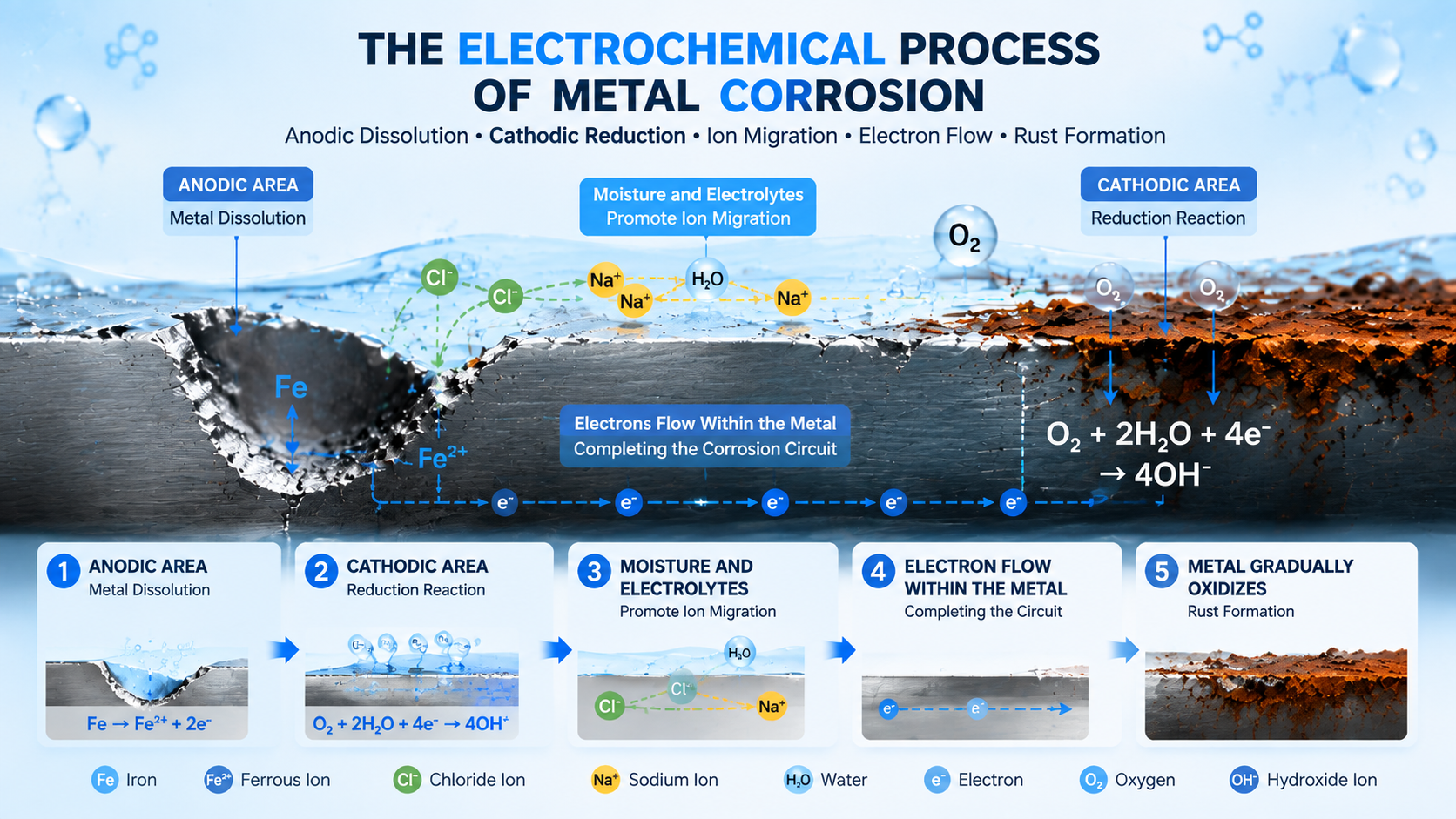
Metal corrosion is primarily an electrochemical process.
When a metal surface is exposed to moisture, oxygen, and corrosive media, localized areas may form microscopic “corrosion cells,” triggering electrochemical reactions.
During this process:
Eventually, the metal is gradually oxidized, forming the rust products we observe.
Therefore, reducing corrosion risks requires eliminating the necessary conditions that drive corrosion reactions.
During manufacturing, even identical metal materials may show completely different corrosion performance.
Some components remain stable for long periods, while others are more vulnerable to corrosion.
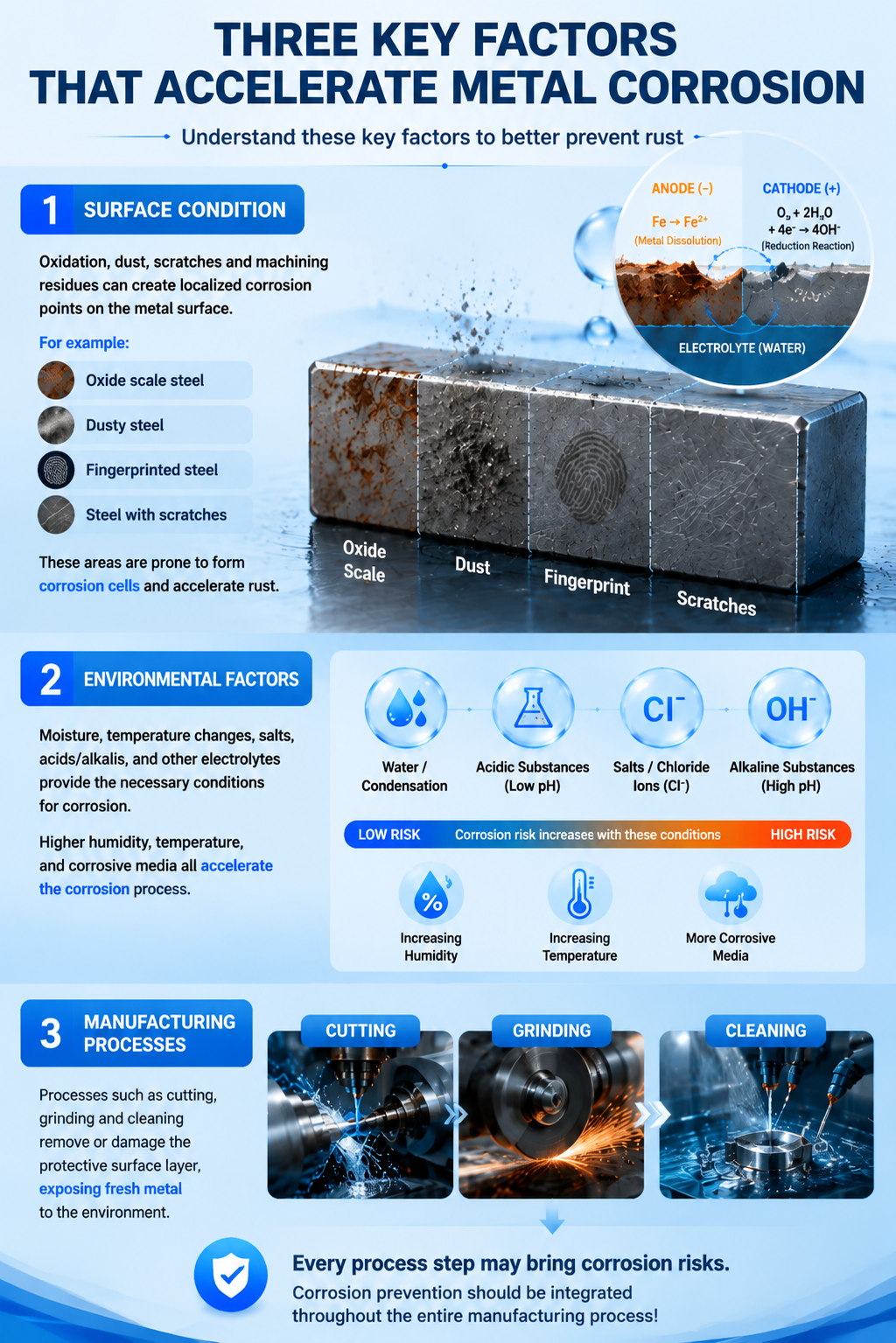
The reasons usually come from three key factors:
Oxide scale, dust, scratches, and machining residues on metal surfaces can become initiation points for corrosion.
These localized defects may accelerate corrosion by creating unfavorable surface conditions.
Moisture, condensation, and corrosive substances such as acids, salts, and alkalis provide essential conditions for corrosion.
Higher humidity, temperature fluctuations, and increased exposure to corrosive media can further accelerate oxidation.
Processes such as cutting, grinding, and cleaning can alter the original surface condition of metals, exposing fresh metal surfaces to the surrounding environment.
Therefore:
Corrosion protection should not be considered a final corrective step after manufacturing — it should be integrated throughout the entire production process.
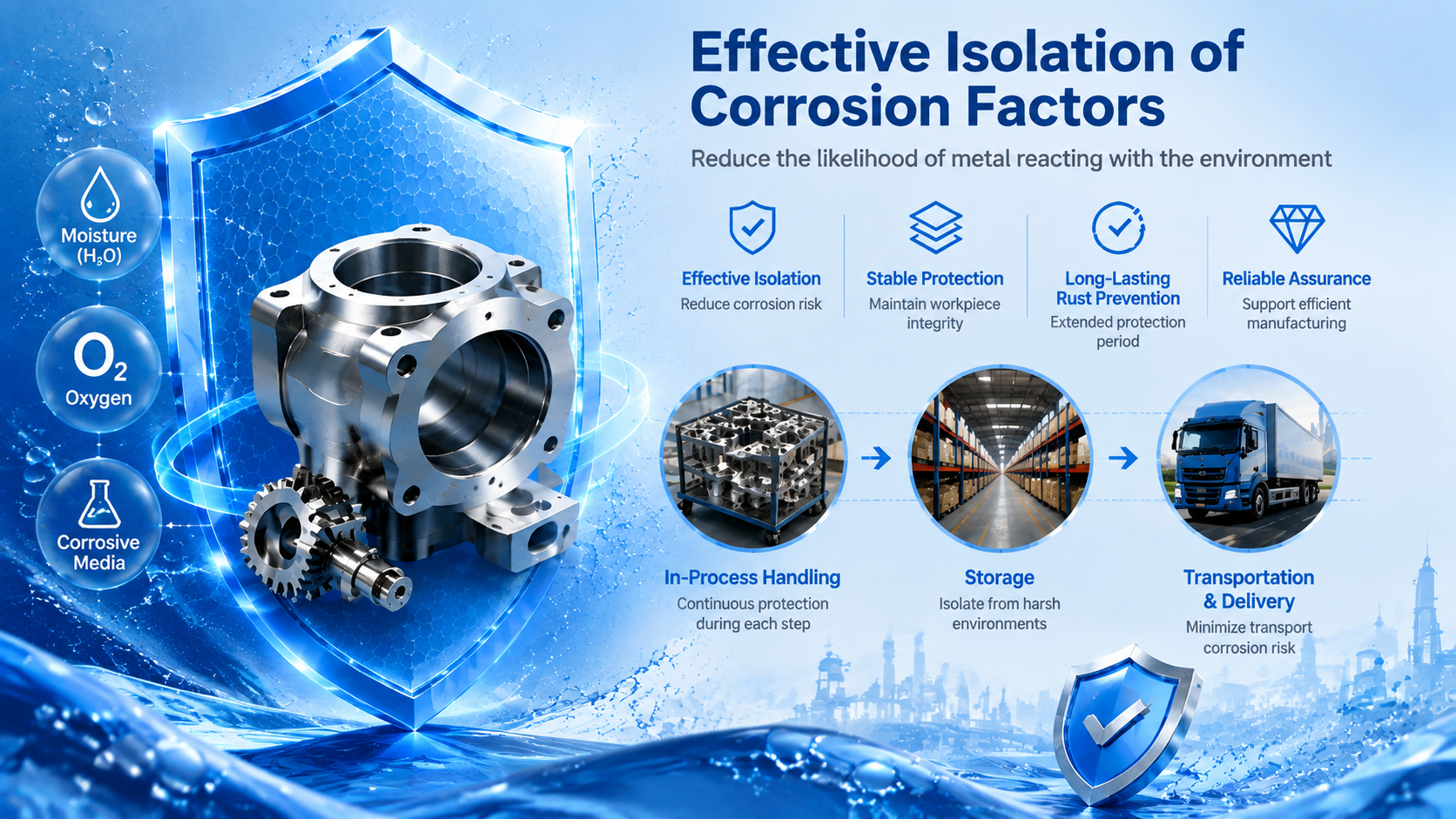
Corrosion requires the combined presence of moisture, oxygen, and corrosive media.
Therefore, effective corrosion protection is not simply about applying a protective layer.
It is about reducing the interaction between metal surfaces and corrosive factors.
For manufacturers, components typically experience multiple stages before final delivery:
Each stage can become a potential corrosion risk.
A reliable protection system should provide:
Because:
Manufacturing quality depends not only on machining precision, but also on reliable protection throughout every stage.
For manufacturers, the value of rust preventive oil goes far beyond simply preventing rust.
More importantly, it provides continuous and stable protection for metal components during waiting periods, handling, storage, and transportation after manufacturing.
KERUN provides comprehensive rust prevention solutions for metal processing.
Through advanced formulation technologies and customized application approaches, KERUN helps protect metal components throughout the manufacturing process.
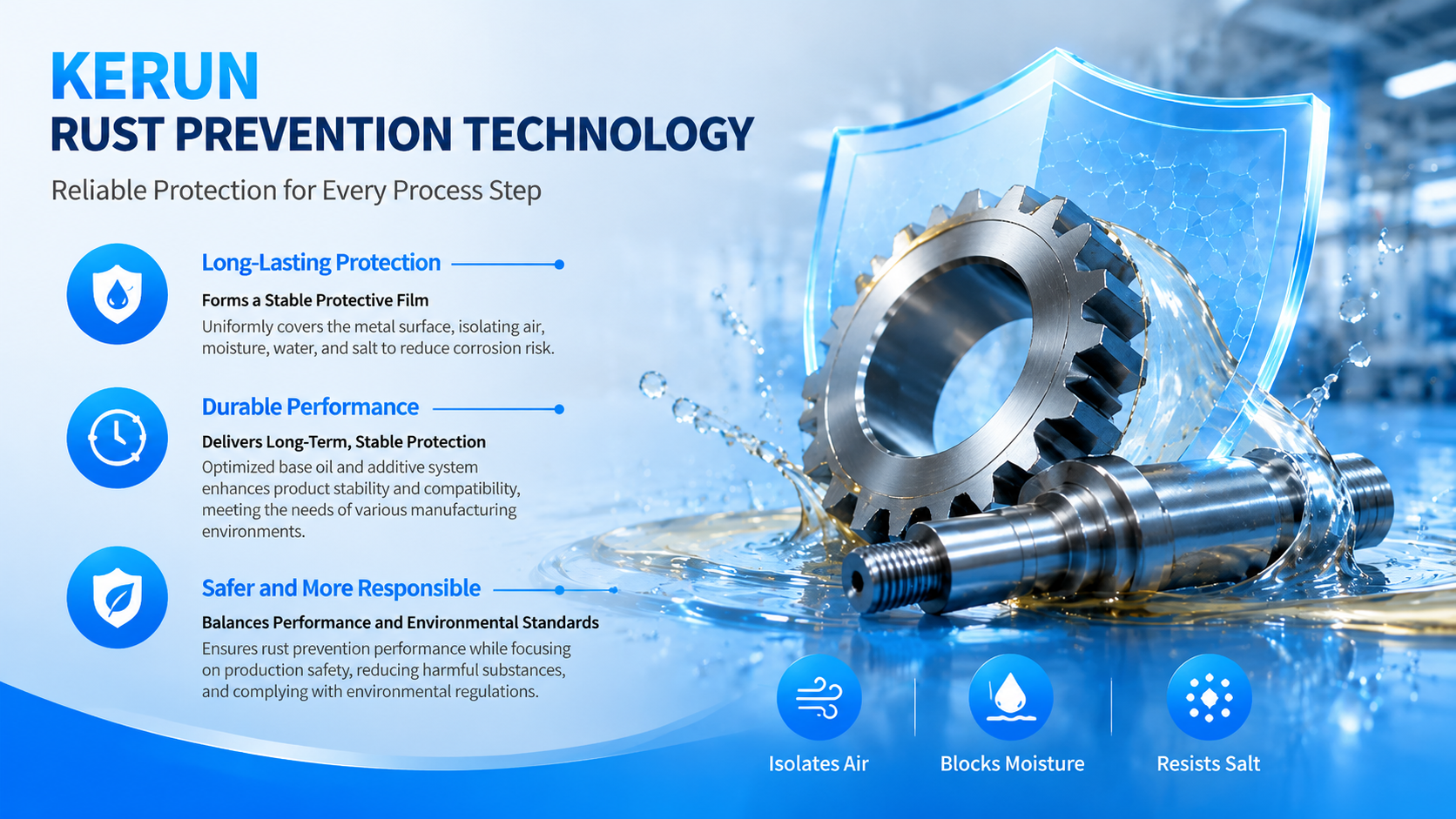
The product forms a uniform and dense protective film on metal surfaces, effectively isolating corrosive factors such as air, moisture, and salts, reducing corrosion risks.
By optimizing base oil and additive systems, KERUN improves product stability and formulation compatibility to meet diverse manufacturing requirements.
While ensuring excellent rust prevention performance, KERUN focuses on production safety and reduced volatile harmful substances to meet environmental requirements.
Metal corrosion is a natural process; controlling corrosion is a manufacturing capability.
From a single drop of rust preventive oil to a complete green industrial media solution system, KERUN continues to drive value through technological innovation.
By developing reliable and sustainable industrial solutions, KERUN helps manufacturers improve efficiency, enhance reliability, and move toward a more advanced, sustainable future.


 EN
EN