Steel cords and bead wires serve as the “structural backbone” of tires, directly impacting safety, durability, and performance.
For decades, the production of these high-strength steel wires has relied heavily on lead bath quenching to achieve the ideal pearlite structure required for superior mechanical properties. However, behind its stable cooling performance lies growing challenges, including lead pollution, occupational health risks, and increasing environmental pressure.
As the manufacturing industry moves toward greener production, a critical question has emerged:
How can manufacturers achieve lead replacement without compromising product performance?
KERUN KR8180 Water-Soluble Quenching Fluid for Steel Cord Applications was developed specifically to address this challenge. Through advanced high-temperature stable vapor film cooling technology, KR8180 delivers a controlled and uniform cooling process in a water-based system, achieving cooling characteristics comparable to traditional lead baths while enabling a cleaner and more sustainable heat treatment process.
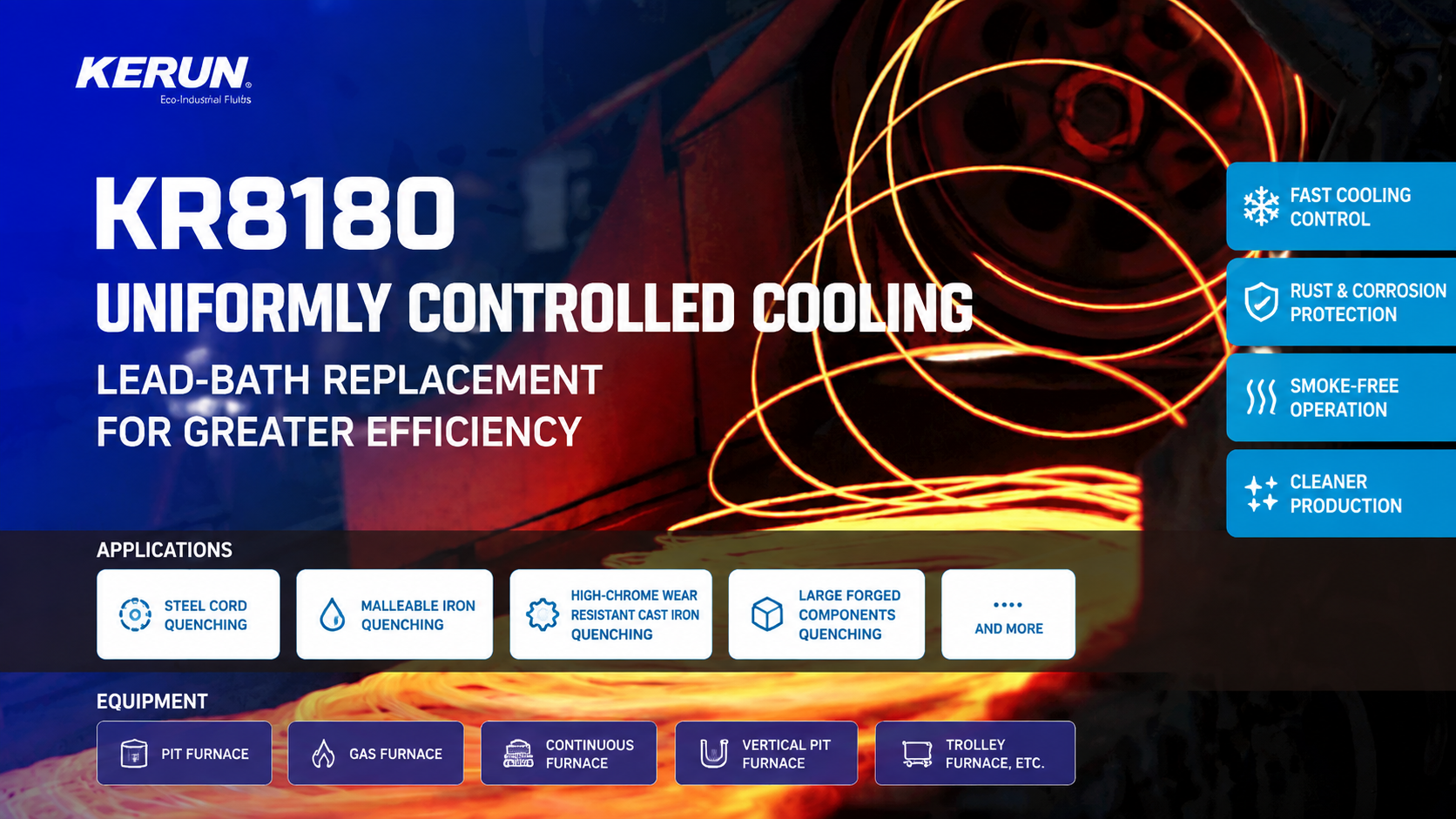
The key challenge in steel cord heat treatment is achieving a fine pearlite structure that combines high strength with excellent ductility.
Traditional PAG water-soluble quenching fluids typically provide faster cooling rates, which may lead to the formation of hard and brittle microstructures, affecting subsequent wire drawing performance. In contrast, lead baths provide a stable isothermal transformation environment, making them the long-standing choice in the industry.
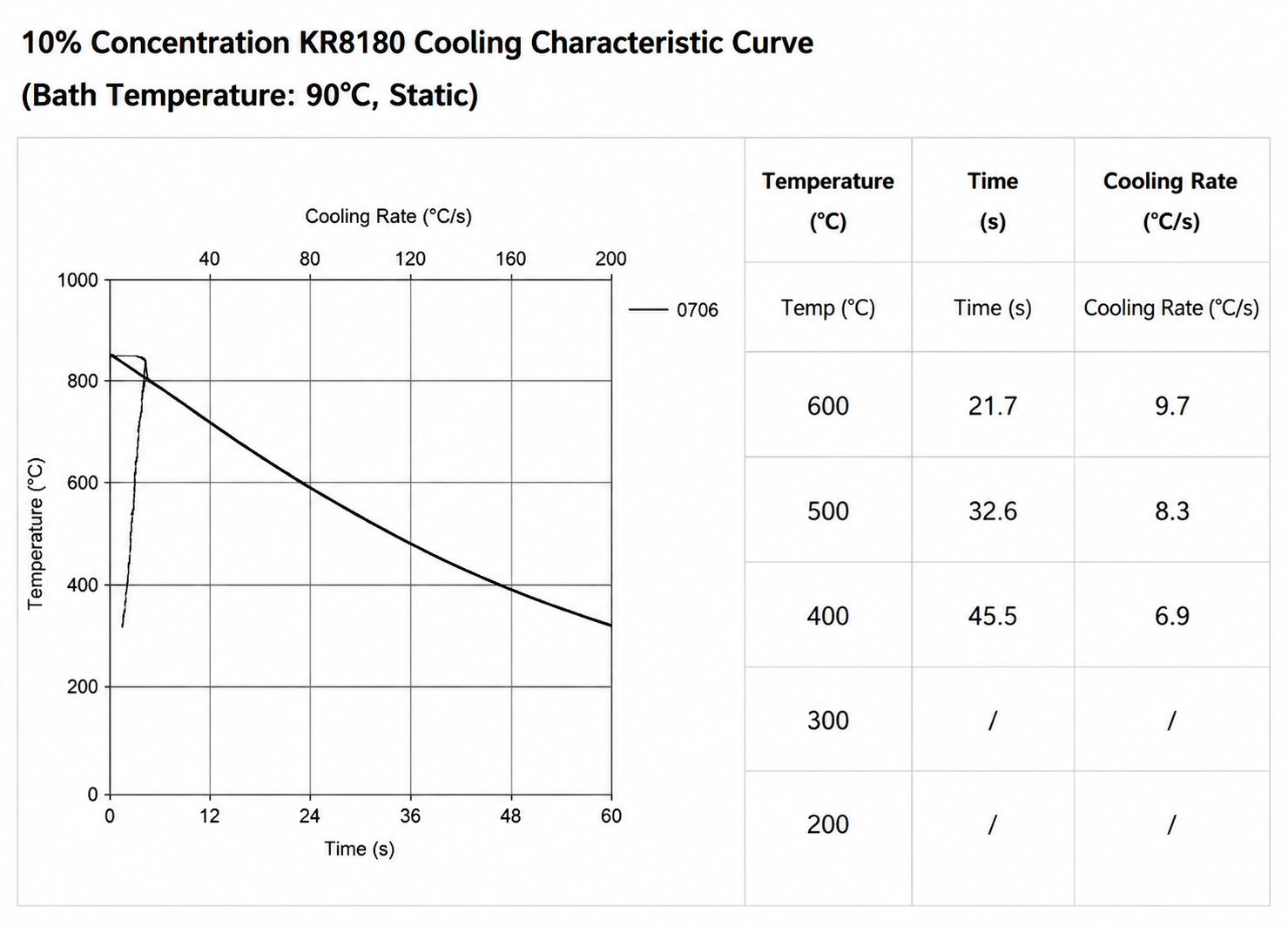
KR8180 utilizes advanced ACR polymer technology with a non-reverse-solubility design. During operation at 85–95°C, it forms a stable and continuous vapor film around the wire surface.
This vapor film acts as a precisely controlled thermal buffer, enabling:
As a result, KR8180 helps manufacturers achieve the ideal pearlite structure required for high-performance radial tires.
In industrial manufacturing, technological innovation must go beyond laboratory validation — it must withstand the demands of continuous production.
During steel cord production, quenching fluids are often affected by borax contamination. As borax concentration increases, cooling performance may fluctuate.
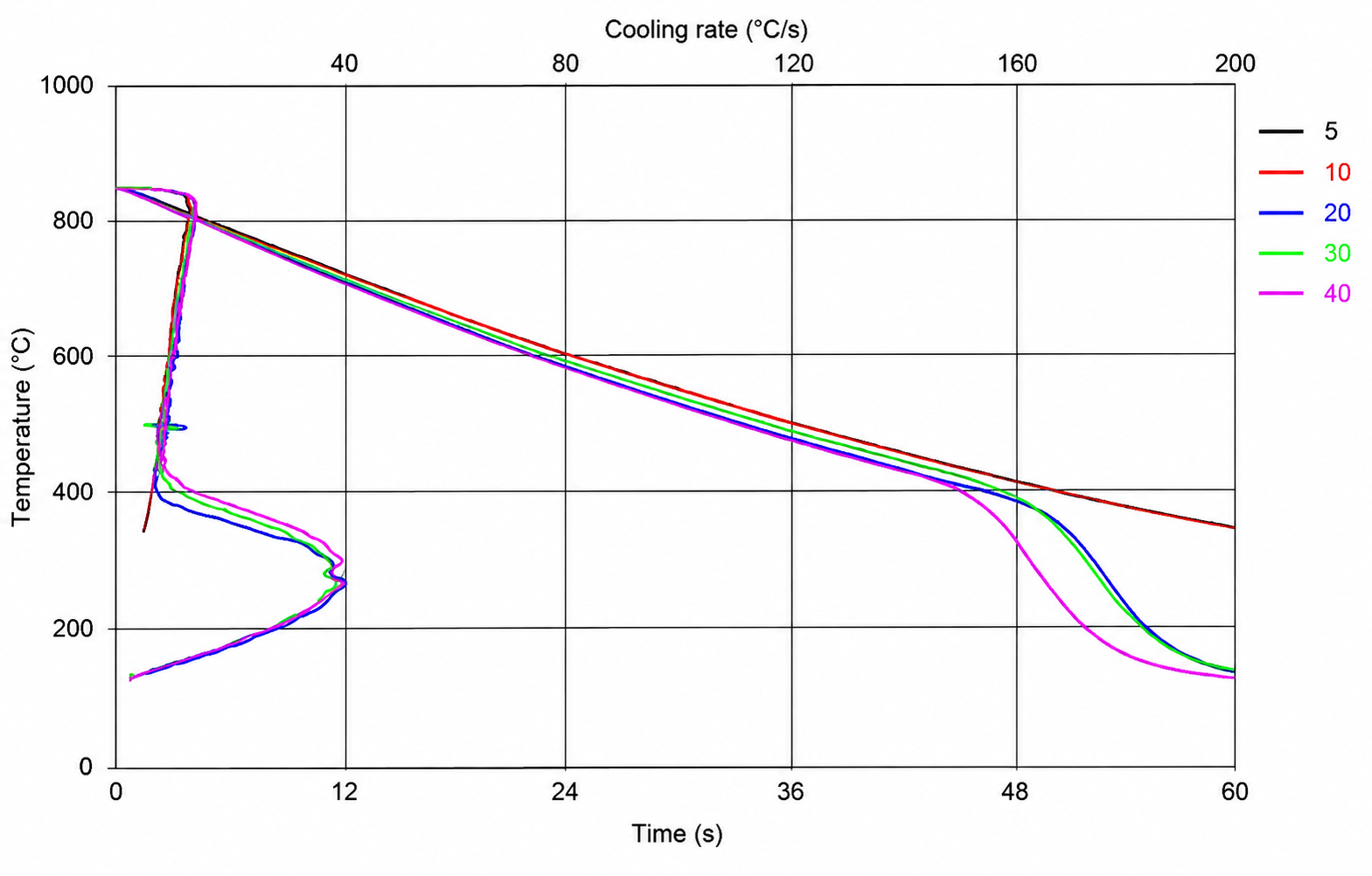
KR8180 is engineered with excellent contamination tolerance and process stability.
Test results show that even with borax concentrations reaching 40 g/L, KR8180 maintains a stable vapor film and controlled cooling performance, providing reliable support for long-term continuous production.
Its stable cooling characteristics also allow direct replenishment during operation, reducing the need for complex tank cleaning and process adjustments. This helps minimize production risks, improve line continuity, and enhance operational efficiency.
KR8180 has been successfully applied in multiple steel cord and bead wire manufacturing companies.
In bead wire production, steel wires treated with KR8180 water bath quenching demonstrate:
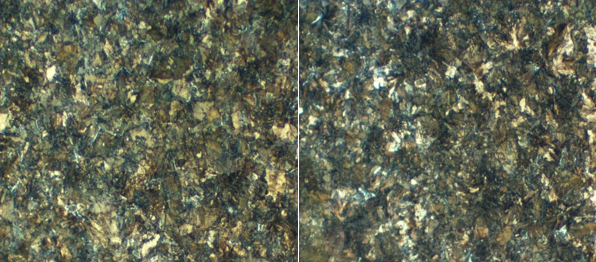
These results confirm KR8180’s capability to support high-performance wire manufacturing.
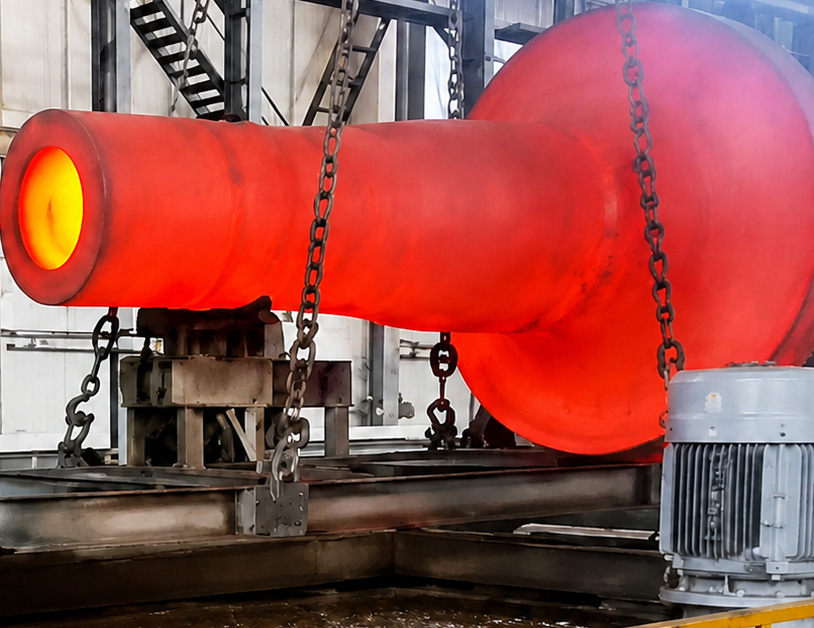
Beyond steel wire applications, KR8180 has also demonstrated strong adaptability in the quenching process of large 42CrMo4 wind turbine main shafts, further validating its potential across different materials, component sizes, and industrial scenarios.
The transition from lead bath to water-based quenching is not simply a change of process medium.
It represents a fundamental shift in manufacturing philosophy:
From high-pollution processes to precise, controllable, and sustainable technologies;
From meeting environmental requirements to creating higher production efficiency and product value.
KERUN KR8180 provides more than a safer and greener alternative to traditional lead bath quenching. It enables customers to achieve a measurable and repeatable manufacturing upgrade — improving sustainability while maintaining process performance.
Moving forward, KERUN will continue advancing industrial fluid technologies and supporting manufacturers worldwide in their transition toward greener, smarter, and more sustainable production.


 EN
EN