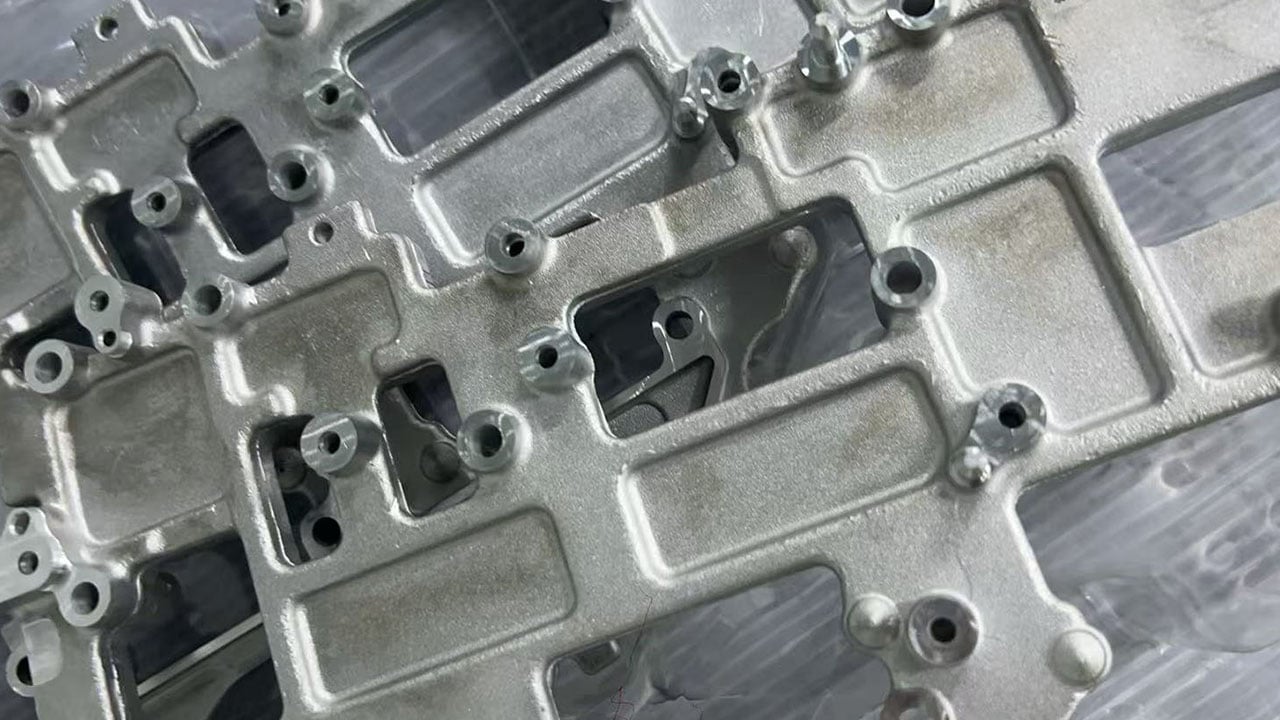
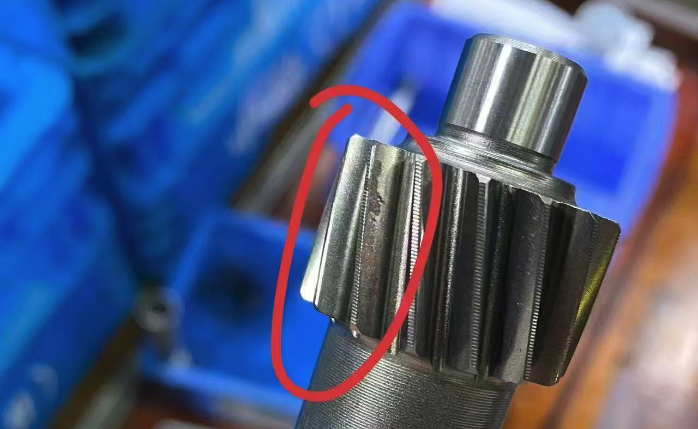
Why do parts still develop rust after applying rust preventive oil?
This is a common challenge faced by many manufacturers.
The rust preventive oil has been applied, the components have been treated, yet corrosion still appears after storage. The first question is often:
“Is the rust preventive oil not effective enough?”
In reality, corrosion protection performance is never determined by the oil alone.
The final result depends on multiple factors, including:
Effective corrosion protection is not simply about adding a protective layer — it is about building a reliable protection system throughout the manufacturing process.
In modern manufacturing, corrosion protection is connected with multiple processes, including cleaning, machining, heat treatment, and surface treatment.
During these processes, residues from previous media may remain on the component surface.
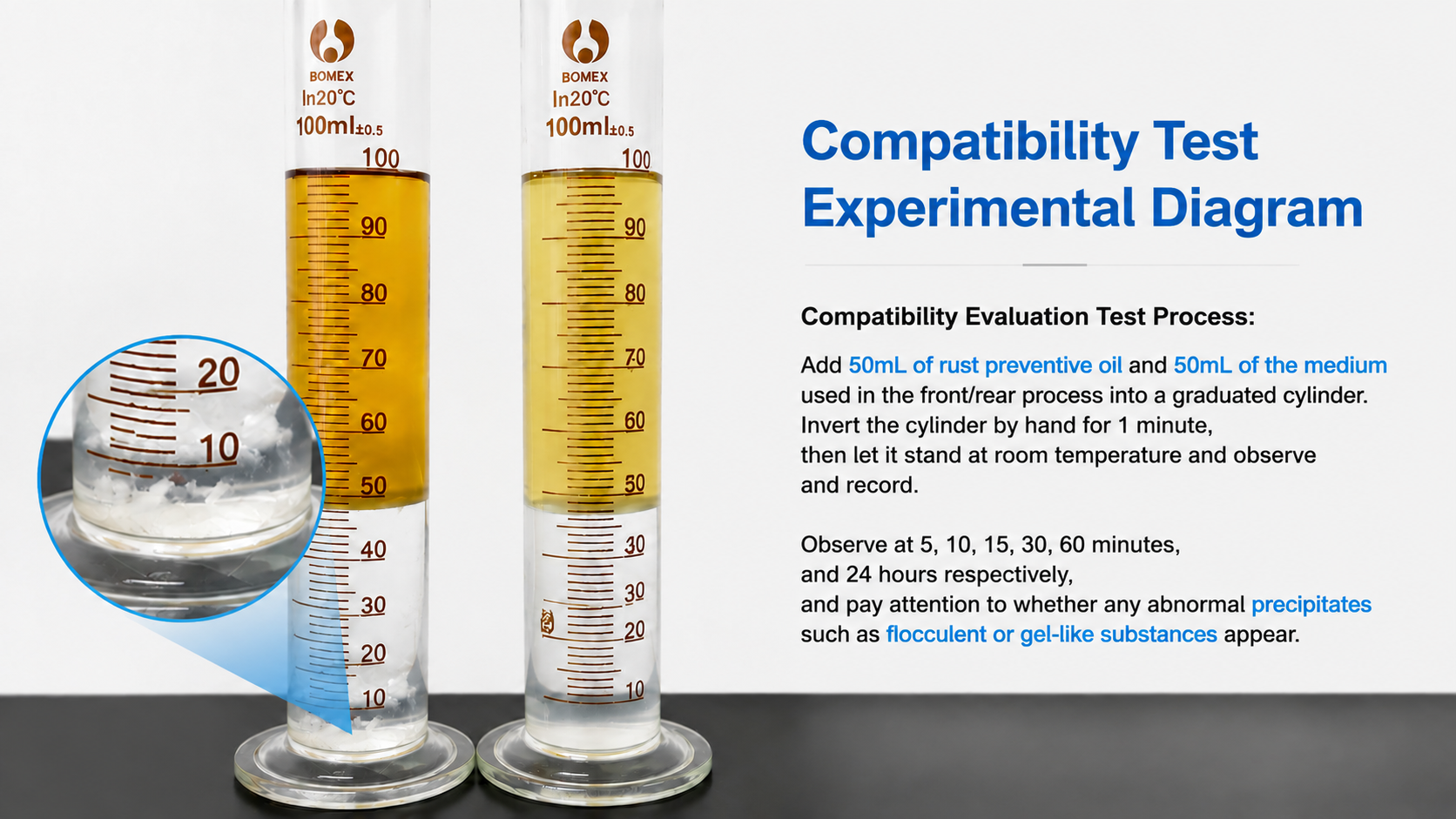
If the compatibility between different process media and rust preventive oil is insufficient, abnormal reactions such as precipitation or gel formation may occur. These issues can affect oil stability and reduce corrosion protection performance.
Before introducing a new rust preventive oil or changing process media, manufacturers should conduct compatibility evaluations.
Simple mixing tests can help identify potential reactions between different media and prevent future quality risks.
Stable corrosion protection starts with the coordination of the entire process chain — not from a single product alone.
Many manufacturers focus on choosing the right rust preventive oil, but overlook a more fundamental question:
Are the components properly prepared before entering the protection process?
The surface condition of the workpiece directly affects the formation and durability of the protective film.
Before applying rust preventive oil, manufacturers should pay attention to:
Oil contamination, impurities, and existing corrosion can prevent the protective film from forming effectively.
Residual kerosene, hydrocarbon cleaners, cutting fluids, or other process media may enter the oil bath and gradually affect corrosion protection performance.
For components that cannot be completely dried, the dehydration capability of the rust preventive oil should be considered, while ensuring sufficient contact time for effective protection.
Corrosion protection is not a final repair step — it is the result of every detail throughout the manufacturing process.
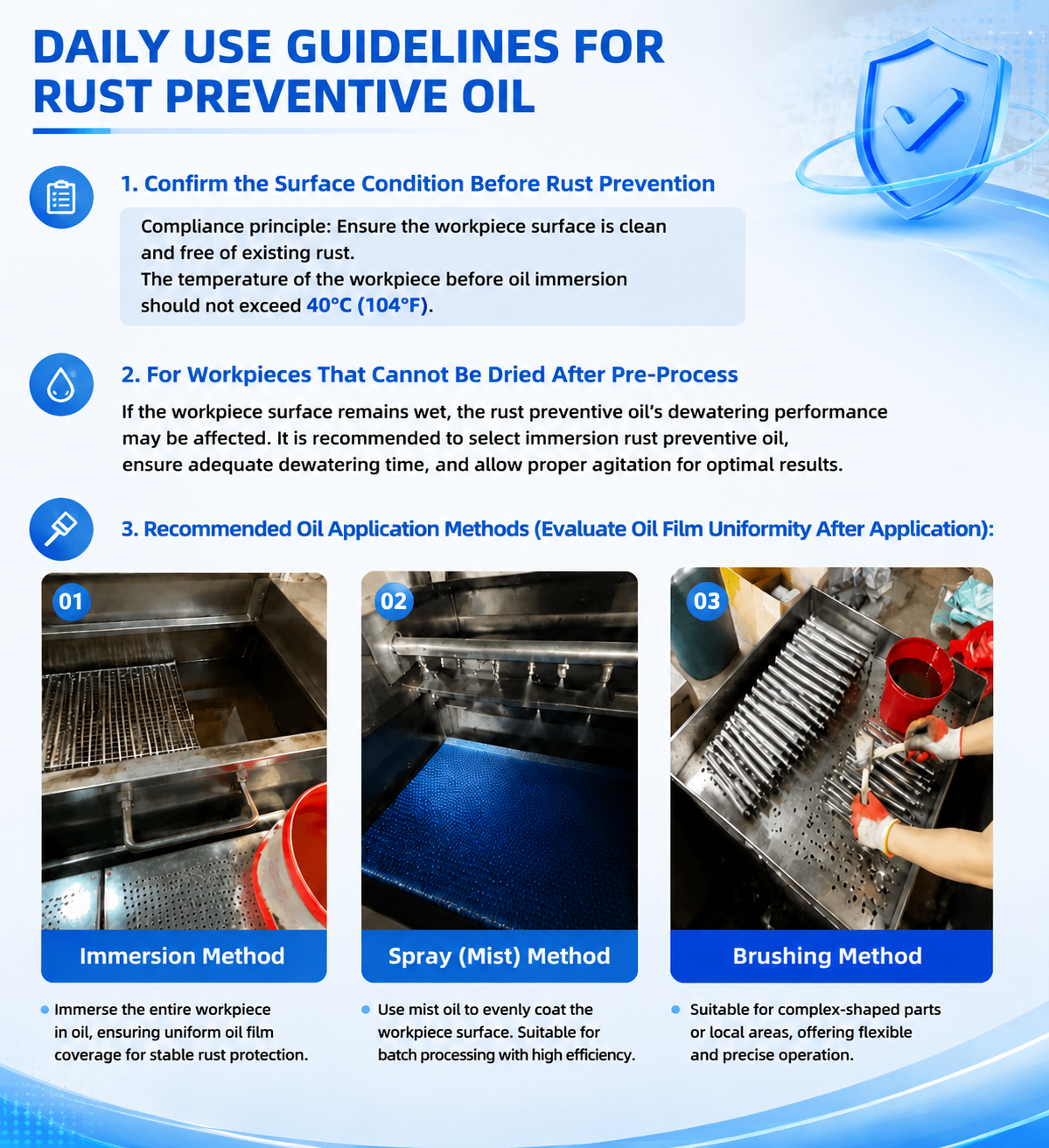
Rust preventive oil is not a “one-time solution”.
During continuous operation, water contamination may accumulate, mechanical impurities may increase, and oil performance may gradually change.
These factors can directly influence corrosion protection stability.
To maintain consistent performance, manufacturers should:
Reliable corrosion protection comes not only from high-quality oil, but also from disciplined process management.
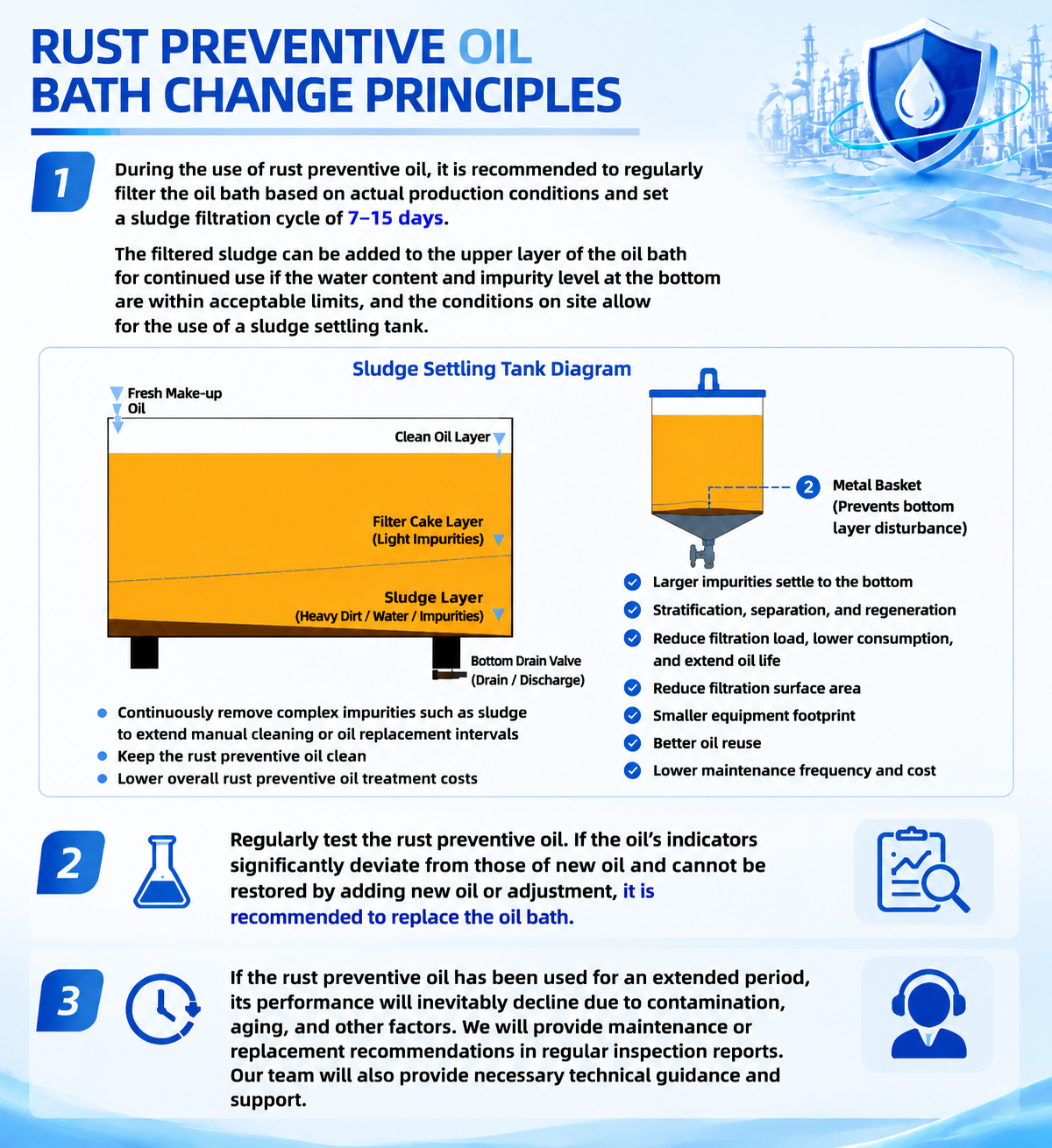
Completing the rust prevention process does not mean the protection is finished.
Improper storage conditions can still compromise final product quality.
After applying rust preventive oil, components should be packaged and stored in a clean and dry environment.
Additional protection methods, such as:
can further improve corrosion resistance during storage and transportation.
From the production floor to the customer's facility, every step influences final product quality.
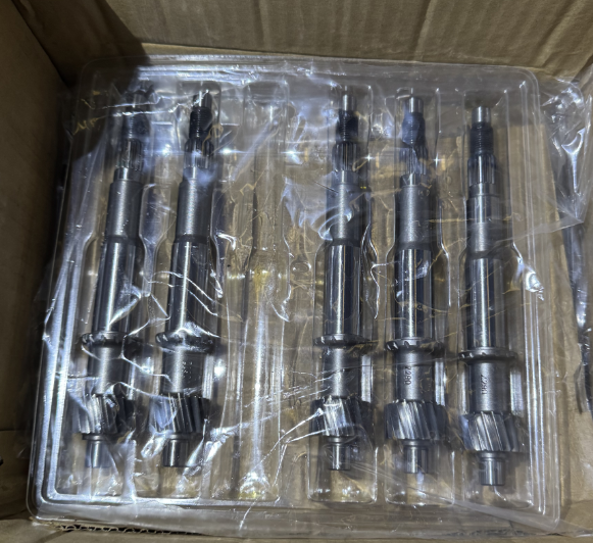
For manufacturers, corrosion protection is never just about purchasing a single product.
A truly reliable protection system requires integration of:
Product Selection → Process Compatibility → On-site Application → Oil Maintenance → Storage Management
As a National-Level Specialized and Innovative “Little Giant” Enterprise, KERUN focuses not only on protecting metal surfaces, but also on improving manufacturing reliability throughout the entire process.
From machining and cleaning to heat treatment and corrosion protection, KERUN continues to develop advanced industrial media solutions through:
Helping manufacturers achieve more stable processes, higher product quality, and more reliable deliveries.


 EN
EN